
How to care for citrus trees in Adelaide
Citrus do well in Adelaide if they get steady water through summer, two feeds a year, a thick layer of mulch and good drainage. Feed in late winter and late summer, prune lightly after harvest, cut out gall wasp galls before spring, and keep the soil evenly moist while fruit is setting.
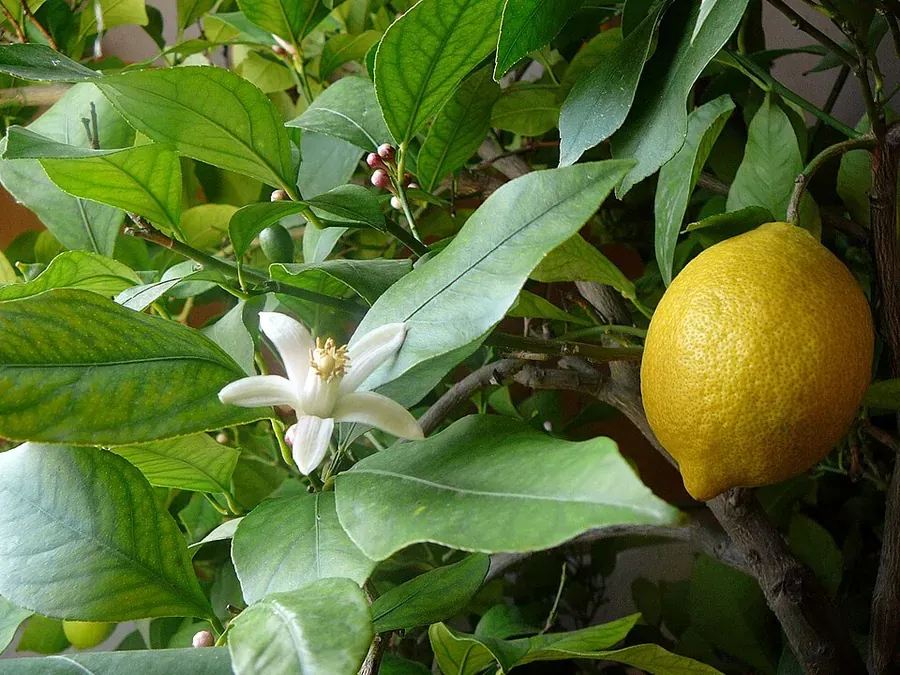
Citrus in fruit. Photo: Elena Chochkova, Wikimedia Commons, CC BY-SA 4.0.

Watering
Section titled “Watering”Citrus have shallow feeder roots that spread out to the edge of the canopy and a little beyond. They dry out quickly in an Adelaide summer.
- Water deeply and regularly from spring to autumn, wetting the whole root zone out to the drip line, not only at the trunk.
- Keep it even while fruit sets in spring. Dry spells then cause fruit drop; feast-and-famine watering in summer causes split fruit.
- Use drippers or a ring of drip tube around the drip line rather than sprays on the leaves.
- Ease off in winter when rain does most of the work.
In a heatwave, a young citrus may need water every day or two. Curling leaves in the afternoon are a sign it’s short.
Soil and drainage
Section titled “Soil and drainage”Citrus hate wet feet. On Adelaide’s heavy clay, plant on a raised mound or in a raised bed so winter rain drains away. Collar rot (bark rotting at the base of the trunk) often starts where soil or mulch is piled against the trunk.
On sandy coastal soils, mix in compost and use a wetting agent if water beads on the surface.
Feeding
Section titled “Feeding”Citrus are hungry. Feed with a citrus fertiliser twice a year:
- Late winter (August), before spring flowering.
- Late summer (February), to carry the developing fruit.
Spread it around the drip line, not against the trunk, and water it in well. Yellowing leaves with green veins often point to a nutrient shortage; a citrus food with trace elements usually helps.
Pruning
Section titled “Pruning”Citrus need little pruning.
- Light prune after the main harvest (about September): take out dead wood and crossing branches, and lift the skirt off the ground so pests have a harder time climbing in.
- Remove suckers below the graft whenever you see them (spring and summer). They’re thorny rootstock and will take over.
Pests to watch
Section titled “Pests to watch”- Citrus gall wasp: lumpy swellings on twigs. Cut them off before September, when the adult wasps hatch, and bin them. Don’t compost them.
- Fruit fly: a serious pest in SA. Pick fruit as it ripens and bag up fallen fruit. If you find larvae in fruit, report it, and check whether your suburb is in a current outbreak area with restrictions on moving fruit.
- Aphids, scale and leaf miner on new growth: usually a hose-off or a horticultural oil spray if bad.
In October, before the heat, top up mulch to 5 to 7 cm over the root zone, kept a hand’s width off the trunk. It keeps the shallow roots cool and cuts evaporation.
With Groundsman
Section titled “With Groundsman”Groundsman’s citrus entry covers lemons, limes, oranges and mandarins.
- On the Garden tab, open the Plants card and pick Citrus from Fruit and citrus. Place it on the map and tap Done.
- Tap Add care jobs. Groundsman adds a gall wasp check in July, feeds in August and February, a light prune in September, sucker removal in October, December and February, and mulch in October.
- If the tree is on its own drip zone, answer Drippers when its setup questions (Zones > Timers) ask how it’s watered, and add how many drippers and what each gives if you know. Right amount? doesn’t check drip zones in mm, so as summer builds, go by how the tree looks and how damp the soil is a finger deep.
- When you tick off a feed, use the after-care to water it in.
Related
Section titled “Related”Groundsman · smart watering and lawn care for Adelaide homes ·hello@groundsman.au