
How to treat black spot on roses
Pick off spotted leaves and rake up fallen ones, then bin them, not compost them. Water the soil rather than the leaves, and do it in the morning so the bush dries quickly. Use a rose fungicide only if it keeps spreading. Most of the prevention happens in winter, with a good prune in July and a clean-up spray on the bare canes in August.
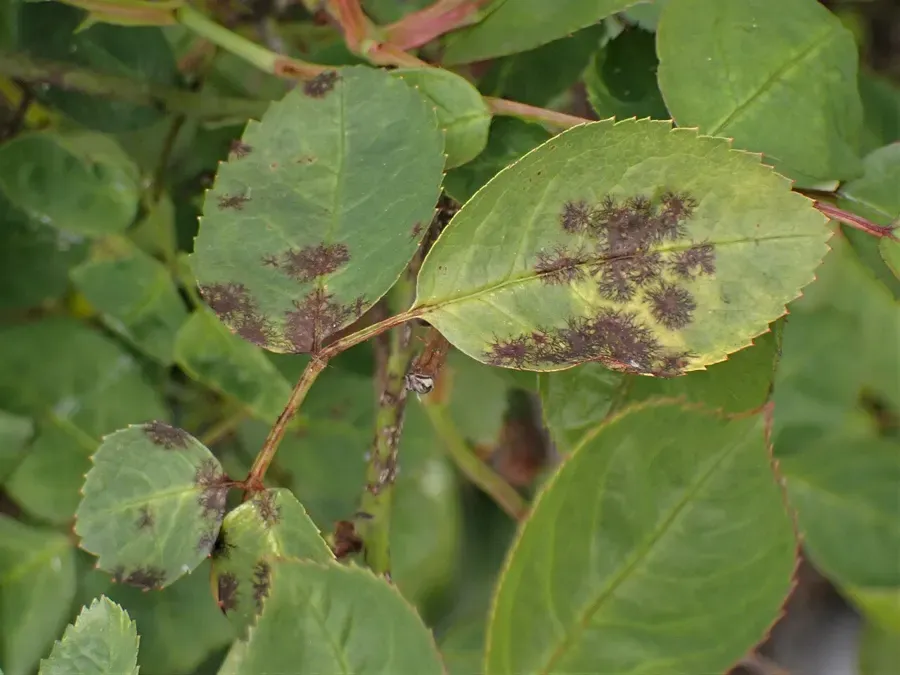
Black spot on rose leaves. Photo: giantcicada, Wikimedia Commons, CC BY 4.0.

What black spot looks like
Section titled “What black spot looks like”Black spot is a fungus (Diplocarpon rosae) that only affects roses.
- Round black spots with feathery edges on the leaves.
- The leaf yellows around the spots and drops.
- It starts at the bottom of the bush and works up, where leaves stay wet longest and rain splashes spores up from the soil.
- Badly hit bushes lose most of their leaves and flower poorly.
It’s worst in warm, humid or showery weather. In Adelaide that usually means spring and autumn, and summer after a storm. Long dry spells hold it back.
Treating it now
Section titled “Treating it now”- Pick off spotted leaves as soon as you see them.
- Rake up fallen leaves under the bush. They carry spores into next season.
- Bin them, don’t compost them.
- Water the soil, not the leaves. Overhead sprinklers on roses are the biggest single cause. Water in the morning, so anything that does get wet dries fast.
- Spray only if it keeps spreading. Use a fungicide labelled for black spot on roses, covering both sides of the leaves, and repeat at the interval on the label. Follow the label rate and safety directions.
A defoliated rose usually grows new leaves within a few weeks. Give it a feed and keep the soil moist (not the leaves) to help.
Preventing it next year
Section titled “Preventing it next year”- Prune in mid-July. Open the centre of the bush into a vase shape so air moves through. Take out dead, crossing and spindly canes.
- Clean-up spray in August. After pruning, a lime sulphur spray over the bare canes knocks back overwintering spores and scale. Not on new leaves.
- Clear the ground of old leaves after pruning.
- Mulch in spring to stop rain splashing spores up from the soil. Keep mulch a hand’s width off the stems.
- Give roses room and sun. Crowded, shaded bushes stay damp.
- Feed well. A healthy bush shrugs off minor infection.
- Choose resistant varieties when you plant new roses.
With Groundsman
Section titled “With Groundsman”- On the Garden tab, add your roses to the map from Plants (bush, climbing and other kinds are listed). See plants on the map.
- Tap Add care jobs. A bush rose gets a winter prune in July, a winter clean-up spray in August, feeds in September, December and February, deadheading, mulch in October, and a check for black spot and aphids from October to March.
- When a check is due, open it from the Today checklist on Home. black spot in the title is a link: tap it for photos, what to look for and what to do. See pests and diseases.
- If you need to spray, use Add a job > Fungicide on the Garden tab. It holds scheduled watering for 24 hours after you mark it Done, so the spray isn’t washed off.
- Water the rose beds with drippers instead of sprays, and set the program to start early in the morning. See drip tube and weepers.
Related
Section titled “Related”Groundsman · smart watering and lawn care for Adelaide homes ·hello@groundsman.au