
How to check your garden for pests and diseases
Walk the garden once a week in spring and summer and look closely at new shoots, buds and the undersides of leaves. Most problems (aphids, scale, mites, black spot, mildew) are easy to deal with when you catch them on a few leaves, and hard once they’ve spread. Know which plants are prone to what, and check those first.
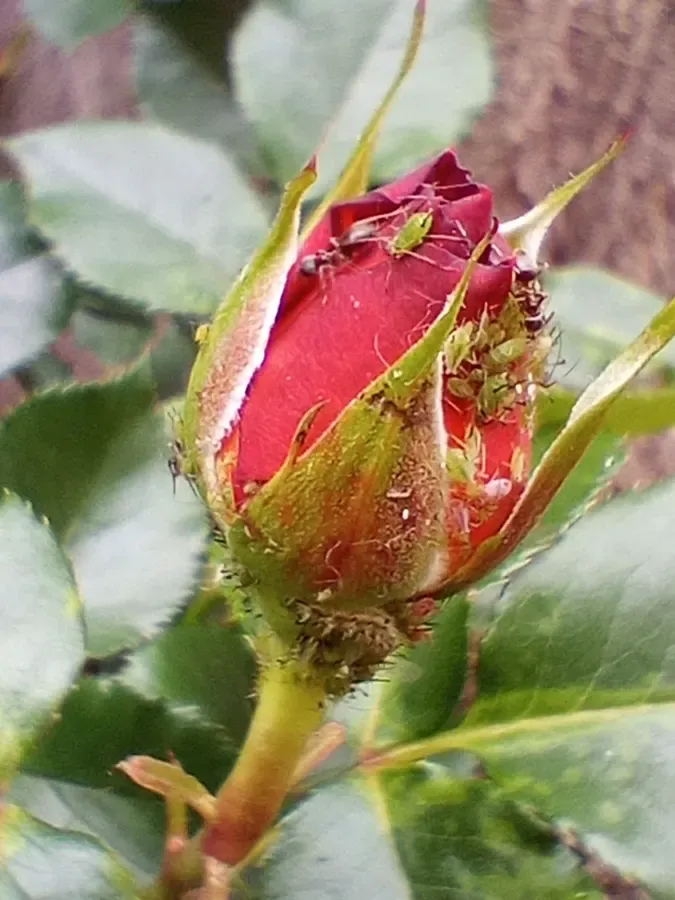
Aphids on a rose bud, with ants tending them. Photo: Natalka Ukraine, Wikimedia Commons, CC BY 4.0.

A five-minute weekly check
Section titled “A five-minute weekly check”- Start with the usual suspects. Roses, citrus, lilly pillies, photinias, fruit trees and hibiscus attract the most trouble in Adelaide gardens.
- Look at new growth. Aphids, psyllids and mildew go for soft young shoots and buds.
- Turn leaves over. Mites, scale and mealybug hide underneath.
- Check stems and leaf joints for bumps, cottony clusters or sticky honeydew.
- Follow the ants. Ants running up a trunk are often farming aphids, scale or mealybug.
- Look for black, sooty leaves, a sign of sap-sucking insects above.
- Note what’s changing. One spotted leaf this week and ten next week means it’s spreading.
What to look for
Section titled “What to look for”| You see | It’s probably |
|---|---|
| Small green, pink or black insects on new shoots | Aphids |
| Black spots with feathery edges on rose leaves, yellowing and dropping | Black spot |
| White to grey powder on leaves and buds | Powdery mildew |
| Fine pale speckles, bronzed leaves, fine webbing | Spider mites |
| Small still bumps on stems and under leaves | Scale |
| White, fluffy, cottony clusters in leaf joints | Mealybug |
| Pimples and twisted reddish new leaves on lilly pilly | Psyllids |
| Woody lumps on young citrus twigs | Citrus gall wasp |
| Skeletonised leaves with small black slimy larvae | Pear and cherry slug |
| Soft, dropped fruit with sting marks | Fruit fly |
When to act
Section titled “When to act”- Start gentle. Pick off spotted leaves, squash or hose off aphids, prune out affected shoots. Many outbreaks stop there.
- Encourage helpers. Ladybirds, lacewings and hoverflies eat aphids and mites. Broad-spectrum sprays kill them too.
- Spray only if it keeps spreading, with a product labelled for that pest and plant. Follow the label rate and safety directions.
- Fix the cause. Mites love hot, dry, dusty plants; mildew and black spot love wet leaves and still air. Water the soil, not the foliage, and water in the morning.
- Fruit fly is a special case in South Australia. If you’re in an outbreak area, follow PIRSA’s current rules on picking, disposing of and moving fruit.
Seasons in Adelaide
Section titled “Seasons in Adelaide”- Spring (September to November): aphids on roses and new growth, the first black spot and mildew, psyllids on lilly pillies.
- Summer (December to February): mites in the heat, scale and mealybug, fruit fly in fruiting trees.
- Autumn (March to May): mildew with cool nights and warm days, black spot after showers.
- Winter (June to August): clean-up sprays on dormant roses and fruit trees after pruning.
With Groundsman
Section titled “With Groundsman”Groundsman puts pest and health checks on your calendar for the plants you actually have.
- On the Garden tab, open Plants and add your plants to the map, from the list or with Pick from pictures instead. See plants on the map.
- Tap Add care jobs. Plants that need it get pest and health checks at the right time of year for Adelaide, such as a black spot and aphid check on roses from October to March.
- When a check is due, it’s on the Today checklist with the plants ringed on the map. Pests and diseases named in the job title are links: tap one to see What to look for, with photos and what to do. Groundsman covers 16 common problems. See pests and diseases.
- For anything else, use Add a job > Pest and health check on the Garden tab and pick a repeat.
- Water beds with drippers where you can, so leaves stay dry. See drip tube and weepers.
Related
Section titled “Related”Groundsman · smart watering and lawn care for Adelaide homes ·hello@groundsman.au