
How to prune fruit trees in winter
Prune most deciduous fruit trees in July, while they’re bare and dormant. Aim for an open, vase-shaped tree low enough to pick from, remove dead, crossing and inward branches, and cut to suit how each tree fruits. Leave apricots and cherries until after harvest in late summer.
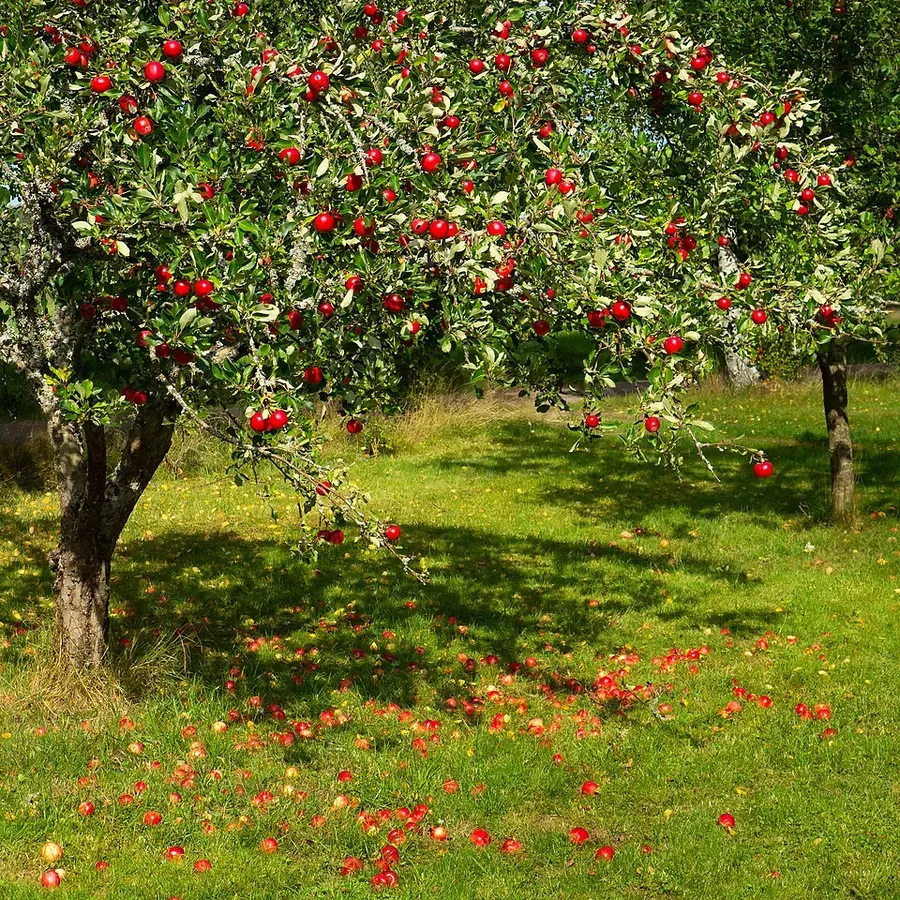
An apple tree in fruit. Photo: W.carter, Wikimedia Commons, CC0.

Why winter?
Section titled “Why winter?”With the leaves off you can see the tree’s shape, the tree isn’t putting energy into growth, and cuts heal as growth starts in spring. In Adelaide, July is the usual month; finish before buds start to swell in August.
The basics for every tree
Section titled “The basics for every tree”- Clean, sharp tools. Bypass secateurs, loppers and a pruning saw. Wipe blades between trees.
- Dead, diseased and damaged first. Cut back to healthy wood.
- Crossing and rubbing branches. Keep the better-placed one.
- Open the centre. Take out branches growing into the middle so light and air reach the fruit.
- Keep it reachable. Shorten tall leaders to an outward bud so you can net and pick from the ground or a short ladder.
- Cut a few millimetres above a bud or back to a branch, without leaving a stub.
Don’t take more than about a quarter to a third of the tree in one year.
Peaches and nectarines
Section titled “Peaches and nectarines”They fruit on wood that grew last summer, so they need a firm prune every winter to keep new fruiting wood coming. Cut back last season’s growth by about half to two thirds, and remove older wood that has already fruited.
In August, spray with copper at bud swell, before any green shows, to prevent leaf curl.
Apples and pears
Section titled “Apples and pears”They fruit on short, stubby spurs that carry fruit for several years. Keep an open centre, shorten new leaders, and keep the spurs. Thin out crowded spurs on older trees.
In October, hang codling moth traps and band the trunks with corrugated cardboard.
Figs and grapes
Section titled “Figs and grapes”- Figs: while bare, remove dead, crossing and inward branches and keep the tree low. Wear gloves; the sap irritates skin.
- Grapevines: cut last season’s canes back to two-bud spurs on the main arms, or keep a couple of long canes for cane-pruned kinds.
Leave these until late summer
Section titled “Leave these until late summer”Apricots and cherries are prone to silver leaf and gummosis, fungal diseases that get in through pruning cuts in cool, wet weather. Prune them after harvest in late summer, when it’s dry and cuts heal fast.
After pruning
Section titled “After pruning”- August: feed with fruit-tree fertiliser.
- October: top up mulch to 5 to 7 cm, kept off the trunks.
- November: thin fruit, a hand’s width apart for stone fruit and one or two a cluster for apples and pears, for bigger, better fruit.
- December to March: pick fruit as it ripens and bag fallen fruit. Fruit fly is a serious pest in SA, so report any you find.
With Groundsman
Section titled “With Groundsman”Groundsman has entries for stone fruit, apples, pears, figs and grapevines, among others.
- On the Garden tab, open the Plants card and find your tree under Fruit and citrus. Place it on the map and tap Done.
- Tap Add care jobs. For an apple, that’s a winter prune in July, a feed in August, codling moth traps, powdery mildew checks and mulch in October, and fruit thinning in November.
- Stone fruit get a prune in July and February (peaches and nectarines in winter, apricots and cherries after harvest), a leaf curl spray in August and fruit fly checks from December.
- Jobs show on the Today checklist on Home when due, and in the Season calendar on the Garden tab.
- After a copper spray, use the after-care to hold scheduled watering for a few hours so it isn’t washed off.
Related
Section titled “Related”Groundsman · smart watering and lawn care for Adelaide homes ·hello@groundsman.au