
How to trim a hedge
Trim a hedge so it’s slightly wider at the base than at the top, and trim little and often rather than one hard cut a year. In Adelaide most hedges want a trim after the spring flush (October or November) and again in early autumn (February or March). Avoid trimming in a heatwave: fresh cuts scorch.
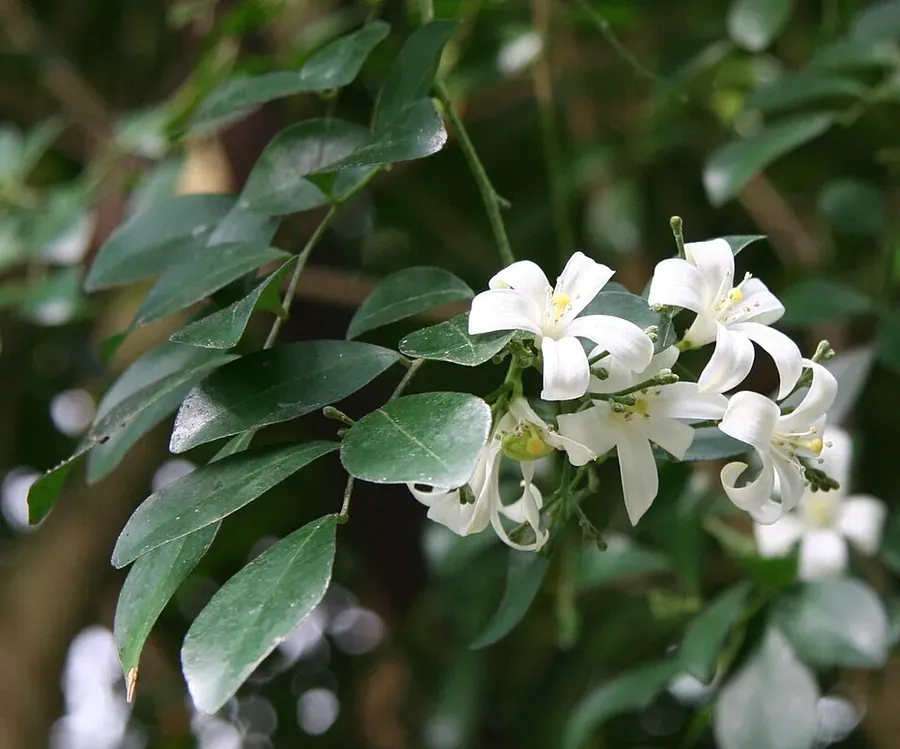
Murraya, a common Adelaide hedge. Photo: Michael Wolf, Wikimedia Commons, CC BY-SA 3.0.

Shape: wider at the base
Section titled “Shape: wider at the base”The most common mistake is a hedge that’s wider at the top. The top shades the bottom, and the lower branches thin out and go bare. A slight taper, called a batter, lets light reach the base so the hedge stays dense to the ground.
- Make the base 10 to 15 cm wider than the top on a 1.5 m hedge.
- Round the top edges slightly on informal hedges; it sheds rain and looks softer.
Keep it straight
Section titled “Keep it straight”- Run a string line between two stakes at the height you want, and trim to it.
- Trim the sides first, from the bottom up, then the top.
- Step back every few metres and look along the hedge.
- Hand shears for small hedges and buxus balls; they give the neatest finish.
- Powered hedge trimmers for long or tall hedges. Keep the blade parallel to the face and sweep in arcs.
- Secateurs to cut out dead or diseased branches inside.
- Clean blades between hedges, especially on buxus, to avoid spreading box blight.
When to trim each hedge
Section titled “When to trim each hedge”| Hedge | When to trim in Adelaide | Watch out for |
|---|---|---|
| Buxus | November and March | Box blight after wet spells |
| Murraya | After each flowering flush (about November and February) | Takes a hard cut in spring if leggy |
| Lilly pilly | October, December and March | Psyllids: pimply new leaves |
| Photinia ‘Red Robin’ | October and February, after the red flush colours | Leaf spot |
| Westringia | November and March, light trims | Never cut into bare wood |
| Conifers | October and March, soft green growth only | Never cut into brown wood |
Plants that won’t regrow from old wood
Section titled “Plants that won’t regrow from old wood”Conifers, westringia and lavender don’t reshoot from bare, leafless wood. A hard cut into it leaves a permanent hole. Trim only the green growth, a little each time, and never take a conifer back past its foliage.
Murraya, lilly pilly, photinia and buxus can be cut back harder to renovate a leggy hedge, best in spring when they grow fastest.
Water and feed after trimming
Section titled “Water and feed after trimming”A trim triggers new growth, which needs water. In summer, deep-water the hedge the day after trimming. A drip line along the hedge is ideal. Feed in September with slow-release fertiliser, or a low-phosphorus native fertiliser for lilly pilly and westringia; ordinary fertiliser can harm many natives.
With Groundsman
Section titled “With Groundsman”Groundsman times each trim for the hedge you have.
- On the Garden tab, open the Plants card and choose your hedge from the Hedges group, or use Pick from pictures instead.
- Tap Place on the map and click along the hedge (one dot for a stretch is fine), then Done.
- Tap Add care jobs. Trims, feeds and health checks appear on the Garden tab in the right months, with the notes above.
- When a trim comes up on the Today checklist on Home in a heatwave, tap Later and pick Next week.
- For a hedge not in the list, use Add a job on the Garden tab and choose Hedge trim, set to repeat in the months you want.
Related
Section titled “Related”Groundsman · smart watering and lawn care for Adelaide homes ·hello@groundsman.au